


Views: 0 Author: Site Editor Publish Time: 2026-04-16 Origin: Site


Indexing plungers are essential mechanical components used in various industrial applications to provide positive and secure positioning. These versatile tools find use in machinery, equipment, and automation systems for precise positioning, locking, and indexing purposes. Given the importance of indexing plungers in optimizing operational efficiency, it is essential to choose the right type based on your application requirements. This guide will provide a detailed overview of the factors to consider when selecting indexing plungers, including their types, materials, specifications, and applications.
Indexing plungers, also known as positioning or detent plungers, are used to lock a moving part into a specific position, preventing unintended movement. These devices consist of a spring-loaded pin that engages with a hole or slot, effectively locking the mechanism in place. Indexing plungers come in various designs, including push-to-lock, pull-to-lock, and over-center locking mechanisms, providing flexibility for different applications.
They are commonly used in industrial machines, jigs, fixtures, conveyor systems, and workstations. The main purpose of indexing plungers is to provide accurate and repeatable positioning for machinery, tools, and components. They help reduce errors caused by slippage or unintentional movement, ensuring a high level of precision in manufacturing and assembly processes.
Several types of indexing plungers are available, each offering unique locking mechanisms and features. The most common types include:
Push-to-lock indexing plungers feature a pin that locks automatically when pushed into a hole or slot. This type is simple to use and offers secure positioning. It is ideal for applications where ease of use and quick engagement are essential. Push-to-lock plungers are commonly found in machines with frequent setup changes or fast-paced manufacturing processes.
Pull-to-lock indexing plungers work similarly to push-to-lock plungers but require pulling the pin out to disengage the locking mechanism. This type is typically used in situations where the plunger needs to be manually reset after each use, providing a more controlled locking and unlocking process.
Over-center locking indexing plungers provide a more secure locking mechanism that requires the user to push the plunger past a specific point, ensuring the pin is securely locked in place. These plungers are commonly used in high-force applications where a more robust locking mechanism is necessary.
Detent indexing plungers feature a pin with multiple detents (small grooves or indentations) that allow for incremental indexing. These plungers are typically used in applications that require precise position adjustments and are ideal for equipment that requires continuous movement between positions.
Hydraulic and pneumatic indexing plungers are used in automated or high-force applications. These plungers are activated by hydraulic or pneumatic pressure, allowing for smooth and precise positioning in automated systems or machines. Hydraulic and pneumatic plungers are commonly found in advanced manufacturing processes, where speed and precision are critical.
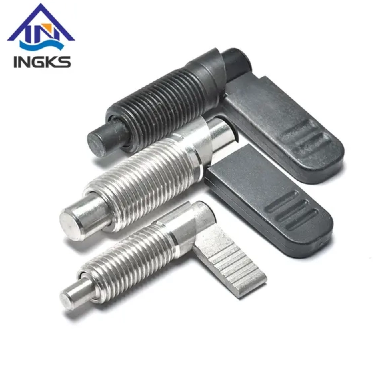
When selecting indexing plungers, it is crucial to consider several factors to ensure you choose the right one for your application. Below are some key considerations:
The load capacity of the indexing plunger is an essential factor in determining its suitability for a specific application. It is important to choose a plunger with a load rating that matches or exceeds the expected force or weight it will support during operation. If the load capacity is too low, the plunger may fail to lock securely or may wear out prematurely.
The material of the indexing plunger plays a critical role in its performance and durability. Common materials used in indexing plungers include stainless steel, carbon steel, brass, and aluminum. Stainless steel is highly resistant to corrosion and is ideal for applications in harsh environments, while brass and aluminum offer good strength and corrosion resistance for lighter applications.
For heavy-duty applications, carbon steel indexing plungers may be preferred due to their superior strength and durability. It is essential to consider the environment in which the plunger will operate, as the material choice will impact its resistance to corrosion, wear, and fatigue.
The stroke length refers to the distance the plunger pin travels when engaged or disengaged. The stroke length determines how far the pin can extend into the lock mechanism. It is crucial to select a plunger with an appropriate stroke length for your specific application. A plunger with too short a stroke length may not engage properly, while one with too long a stroke length may lead to an overextended pin that could become damaged.
Indexing plungers come in various pin styles, including straight pins, ball detents, and tapered pins. The pin style determines the engagement method and the type of locking mechanism used. Additionally, the pin size must be compatible with the hole or slot in the workpiece to ensure a secure fit.
Consider the environmental factors, such as temperature extremes, humidity, exposure to chemicals, and the presence of dirt or debris. These factors can affect the performance and longevity of the indexing plunger. For example, indexing plungers used in outdoor or high-humidity environments should have corrosion-resistant coatings or materials to prevent rust and degradation.
Indexing plungers can be operated manually, mechanically, or automatically. Depending on your application, you may require a manual push-to-lock plunger, a mechanical plunger activated by a lever, or an automated hydraulic or pneumatic plunger. The actuation method should align with the level of control and automation in your system.
Indexing plungers are versatile components used in a wide range of applications, including:
Machinery and Equipment: Indexing plungers are used to secure machine components in place during operation, preventing unintentional movement that could lead to errors or equipment damage.
Workstations and Jigs: In manufacturing settings, indexing plungers are used in workstations, jigs, and fixtures to lock tools or components in a fixed position, ensuring consistent and accurate work.
Automation Systems: Automated systems use indexing plungers to position parts or tools automatically, allowing for precise control and efficient operation.
Conveyor Systems: Indexing plungers are often used in conveyor systems to control the movement and positioning of materials, allowing for precise indexing and handling of items.
Testing and Calibration: Indexing plungers are used in test equipment to lock components in specific positions during calibration and testing procedures.
Selecting a reliable supplier for indexing plungers is critical to ensuring the quality and performance of your components. A reputable supplier should offer high-quality products with precise specifications and provide excellent customer service and support. When choosing a supplier, consider factors such as:
Product Range: A supplier should offer a variety of indexing plungers, including different types, materials, sizes, and actuation methods to meet your specific needs.
Customization Options: Many suppliers offer custom indexing plungers tailored to your requirements. Customization options can include material selection, size, stroke length, and actuation method.
Quality Assurance: A reliable supplier should have stringent quality control measures in place to ensure that their products meet industry standards and specifications.
Customer Support: The supplier should offer responsive customer support to assist with product selection, troubleshooting, and after-sales service.
Wuxi Ingks Metal Parts Co., Ltd. is a trusted supplier of indexing plungers, providing high-quality products designed for various industrial applications. With a focus on precision and reliability, they offer a wide range of indexing plungers that can be customized to meet your specific requirements.
Q: What is an indexing plunger?
A: An indexing plunger is a mechanical component used to lock a part in place, ensuring secure positioning during operation. It uses a spring-loaded pin that engages with a hole or slot to prevent unintended movement.
Q: How does an indexing plunger work?
A: An indexing plunger works by engaging its pin into a hole or slot when pushed, effectively locking the component in place. The pin can be disengaged by either pushing or pulling it, depending on the design.
Q: Why should I choose an indexing plunger over other locking mechanisms?
A: Indexing plungers provide secure, repeatable positioning with quick engagement and disengagement, making them ideal for applications requiring precise and reliable positioning, such as in machinery, jigs, and automation systems.
Q: Can indexing plungers be customized for my application?
A: Yes, many suppliers offer custom indexing plungers tailored to your specific requirements, including adjustments to material, size, stroke length, and locking mechanism.


