
Views: 0 Author: Site Editor Publish Time: 2026-04-23 Origin: Site


Index plungers are essential components in many mechanical systems, providing a straightforward yet highly effective solution for locking and positioning parts. Despite their simple design, these small devices offer great precision and reliability in a variety of applications, from industrial machinery to custom tooling setups. The purpose of this article is to explain how an index plunger works, focusing on its components, operation, and various uses across industries.
These plungers are an important tool in a wide range of industries, especially in those where fine-tuned, repeatable positioning and secure locking are critical. Applications vary from machinery and fixtures to robotics, automotive, and tool making. Understanding how an index plunger works and selecting the appropriate type for your needs can greatly enhance your operational efficiency, save time, and improve precision.
An index plunger is a mechanical device used to lock, position, and secure parts in place within machines, fixtures, and custom tooling systems. It typically consists of a threaded body, a spring-loaded pin, and a manual operating mechanism like a knob or pull ring.
The plunger’s main role is to provide a locking mechanism that secures a part or component in place at a specific position and allows for precise and repeatable adjustments. Index plungers are highly beneficial in applications requiring frequent repositioning without complex tools or adjustments.
Index plungers are designed to handle different levels of force, repeatability, and accuracy, depending on the application. Their ability to provide secure locking while still allowing easy and fast movement makes them indispensable in many precision-based tasks.
Body
The body of the plunger is typically made of stainless steel or carbon steel. It houses the internal spring and pin mechanism, ensuring the plunger operates smoothly and is durable enough for industrial applications.
Spring-loaded Pin
The spring-loaded pin is the heart of the mechanism. It extends and retracts based on the user’s interaction with the plunger. The spring ensures the pin remains engaged until the user retracts it.
Operating Mechanism
This is the part of the plunger that the user operates, often a knob or lever. The mechanism controls the pin’s extension and retraction, allowing easy manual adjustment.
At its core, an index plunger’s function revolves around its ability to lock a part into place by engaging a spring-loaded pin into a corresponding hole or notch. The mechanism is quite simple but very effective in providing accurate and repeatable locking action.
Here’s a breakdown of how an index plunger works:
The plunger is typically made of a body that is threaded to fit into a machine or fixture. Inside the body is a spring-loaded pin that can extend or retract depending on the action performed by the operator.
When the user pulls or pushes the knob or lever, the spring-loaded pin either extends or retracts from the plunger body. When the pin extends, it engages with a corresponding hole, notch, or indentation on the part or component that needs to be locked in place.
Once the pin is engaged in the hole or notch, the part is securely locked into position. The spring-loaded mechanism ensures that the pin stays in place until the user releases it. This creates a secure and stable position, preventing any unwanted movement.
To adjust the position of the part, the user can simply pull or push the knob or lever to retract the pin. Once the pin is retracted, the part can be moved or repositioned freely. After the part is moved to the desired location, the process can be repeated, with the plunger engaging the pin back into another designated hole or notch to lock the part in place again.
One of the key advantages of index plungers is their ability to provide repeatable positioning. When the pin is re-engaged after each adjustment, it locks the part into the same position with high precision. This repeatability is crucial in many industrial applications, as it reduces the risk of error and ensures consistency in production.
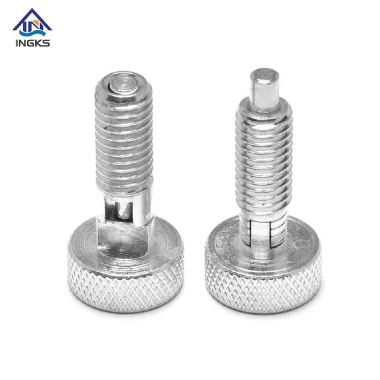
Understanding the components of an index plunger will give you a deeper insight into how it works and its importance in precision-based applications. Here are the main components that make up an index plunger:
The body of an index plunger is typically made of stainless steel, carbon steel, or other durable materials. It houses the internal spring and the pin mechanism. The body is often threaded to allow easy installation into a fixture, tool, or machine.
The spring-loaded pin is the central part of the mechanism. It is designed to extend and retract from the plunger body based on the user’s action. The spring ensures that the pin remains extended once engaged and automatically retracts when the knob is pulled or lever is pushed.
This is the part of the plunger that the user interacts with. It is typically a knob, pull ring, or lever that controls the extension and retraction of the pin. Depending on the design, it can be either push-button or pull-button, and it allows for manual operation of the plunger.
The engagement mechanism consists of the hole, notch, or indentation where the pin locks into place. This is often located on the part, fixture, or tool that needs to be locked into position. The plunger pin will fit into this hole or notch to secure the part.
The locking spring is responsible for maintaining tension and ensuring that the pin remains securely engaged once it has been extended into position. The spring-loaded action allows for easy release and re-engagement of the pin when needed.
Index plungers come in different designs and configurations depending on the needs of the application. There are several types of index plungers available, each suited for specific uses. Here are some of the most common types:
These plungers are activated by pressing a button or knob to extend the pin into the locked position. They are typically used when quick, frequent adjustments are needed, and they provide an efficient and simple locking mechanism.
In these plungers, the pin is extended by pulling the knob or lever. Pull-type plungers are commonly used when a more secure lock is required and when the operator prefers a different type of engagement mechanism.
These are designed for applications that require higher load capacities or more robust locking mechanisms. They are commonly used in heavy machinery and applications where large parts or tools need to be secured with a high level of force.
As the name suggests, these are smaller versions of indexing plungers used for lightweight or compact machinery. They offer the same locking functionality as standard index plungers but are ideal for situations where space is limited.
Index plungers are used across a wide range of industries and applications. Some of the most common uses include:
Index plungers are widely used in the machining industry to lock workpieces or components into position during processing. They help provide repeatable accuracy and stability while reducing the need for additional clamping tools.
In custom tooling setups, index plungers are used to secure tools and parts in place while adjustments are made. Their simple design allows for quick repositioning without complex setups.
Robots and automated systems use indexing plungers for precise part positioning. These plungers allow parts to be locked into position in a fixture or assembly line, ensuring accuracy during robotic operations.
The automotive and aerospace industries often use indexing plungers for locking jigs, fixtures, and parts in place during manufacturing and assembly processes. Their ability to provide precise and repeatable positioning ensures that parts are consistently built to specification.
In automated conveyor systems, index plungers are used to lock parts or containers in place as they move through different stages of production or inspection. This ensures smooth transitions and accurate positioning for further operations.
Feature | Standard Indexing Plunger | Heavy Duty Indexing Plunger | Pull Type Indexing Plunger |
Material | Stainless Steel | Hardened Steel | Stainless Steel |
Locking Mechanism | Push Button | Push Button | Pull Button |
Load Capacity (kg) | 20 | 100 | 50 |
Stroke (mm) | 10 | 20 | 15 |
Temperature Range (°C) | -20 to 80 | -40 to 150 | -20 to 80 |
Mounting Type | Threaded | Non-Threaded | Threaded |
In conclusion, index plungers are an indispensable part of many mechanical systems, providing a simple yet reliable way to lock and position components with precision. Whether used in machinery, robotics, or custom fixtures, these compact devices ensure repeatable and accurate positioning, reducing human error and increasing operational efficiency. Their ease of use, durability, and cost-effectiveness make them a popular choice in numerous industries.
For more information on index plungers and to find high-quality components that can enhance your machinery or tooling systems, visit Wuxi Ingks Metal Parts Co., Ltd. Their wide range of industrial products is designed to meet the needs of diverse applications, ensuring that you find the right solution for your project.
Q: What is an index plunger?
A: An index plunger is a mechanical device used to lock, position, and secure parts in place within machines or fixtures. It features a spring-loaded pin that engages with a hole or notch to lock the part in place.
Q: How does an index plunger work?
A: The index plunger operates by extending or retracting a spring-loaded pin into a corresponding hole or notch. Once engaged, the pin locks the part into position, ensuring stability and precision.
Q: Why should I use an index plunger?
A: Index plungers provide repeatable, secure positioning with minimal effort. They are ideal for applications that require frequent adjustments, allowing for accurate and reliable locking without the need for additional tools.
Q: Can index plungers be used in high-load applications?
A: Yes, heavy-duty index plungers are specifically designed for applications that require higher load capacities. These plungers are made with robust materials and are built to withstand significant force.


