
Views: 0 Author: Site Editor Publish Time: 2025-11-03 Origin: Site


Ever wondered how coil springs impact daily life? These custom springs are vital in numerous industries, offering tailored solutions. In this post, you'll learn about their design, benefits, and applications across automotive, industrial, and medical fields.
Designing a custom coil spring requires careful attention to several key factors. First, the load the spring must bear is crucial. It affects the wire thickness and coil diameter. Next, the space available for the spring dictates its length and overall size. Environmental conditions, such as temperature and exposure to chemicals, influence material choice and surface treatment. The spring's function, whether it needs to compress, extend, or twist, determines its type and winding style. Lastly, the desired lifespan and safety requirements guide the design to ensure reliability over time.
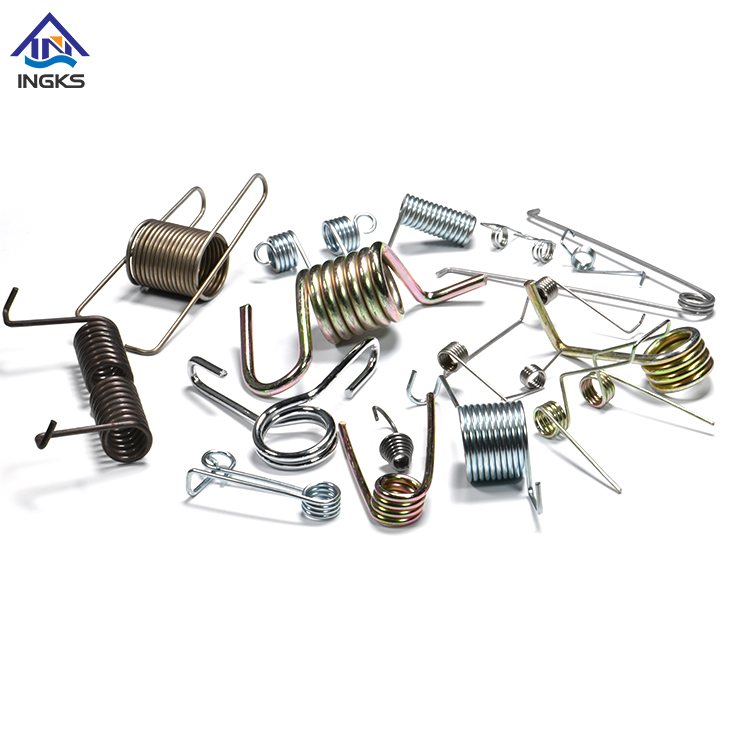
Custom coil springs come mainly in three types, each serving different purposes:
● Compression Springs: These springs compress under load and return to their original shape when the load is removed. They are common in automotive suspensions and industrial machinery.
● Extension Springs: Designed to stretch under tension, these springs return to their initial length when the force is released. You’ll find them in applications like garage doors and trampolines.
● Torsion Springs: These springs work by twisting. They store rotational energy and release it when needed, often used in hinges, levers, and vehicle suspensions.
Choosing the right type depends on how the spring will interact with the forces in its application.
Material choice impacts performance, durability, and cost. Common materials include:
● Stainless Steel: Offers excellent corrosion resistance and works well in harsh environments. Ideal for medical devices and outdoor applications.
● Carbon Steel: Known for high strength and affordability, carbon steel suits many industrial and automotive uses where corrosion is less of a concern.
● Alloys: Specialized alloys, such as chrome silicon or chrome vanadium, provide enhanced strength, heat resistance, and fatigue life. These are perfect for high-stress or high-temperature settings.
Selecting the right material balances performance needs and budget constraints, ensuring the spring performs reliably throughout its life.
Tip: When designing custom coil springs, always communicate detailed load, space, and environmental requirements upfront to get a spring that fits perfectly and lasts longer.
Custom coil springs deliver performance designed exactly for your needs. They match specific load requirements, compression rates, and environmental conditions, ensuring flawless function. Unlike standard springs, custom ones fit perfectly within your device or machine, allowing precise control over force and movement. This precision reduces wear on other parts and improves overall system efficiency. For example, automotive suspensions using custom springs can offer smoother rides and better handling by adjusting stiffness exactly as needed.
Choosing the right materials and design boosts spring durability significantly. Custom coil springs often use high-grade stainless steel, carbon steel, or specialized alloys that resist corrosion, fatigue, and high temperatures. This means they last longer even under heavy use or harsh environments. Longer lifespan reduces downtime and maintenance costs, which is crucial for industries like manufacturing or medical devices where reliability is vital. Plus, custom manufacturing allows for surface treatments or coatings that further protect springs against wear.
While custom coil springs might cost more upfront, they save money over time. Their tailored design minimizes the risk of premature failure, reducing replacement frequency. This lowers maintenance expenses and prevents costly equipment downtime. Additionally, efficient spring performance can decrease energy consumption in machines, contributing to operational savings. Investing in custom springs means fewer surprises and more predictable budgets, especially important for large-scale or critical applications.
Tip: Provide detailed specifications about load, environment, and space constraints early in the design process to maximize your custom spring’s performance and lifespan.
Custom coil springs play a crucial role in many industries. Their ability to be tailored for specific needs makes them invaluable across a wide range of applications.
In vehicles, coil springs are essential for suspension systems. They absorb shocks from the road, providing a smooth ride and better handling. Custom springs can be designed to match the exact weight and performance requirements of a car or truck. Beyond suspension, they are also used in engine valves, seating mechanisms, and door latches. Customization ensures these springs withstand harsh conditions, such as extreme temperatures and constant vibrations, enhancing safety and durability.
Heavy machinery depends on springs that endure high stress and repetitive loads without failing. Custom coil springs can be engineered to handle specific forces, reducing wear and downtime. They improve machine efficiency by maintaining consistent tension or compression, even under intense conditions. For example, presses, conveyors, and manufacturing equipment all benefit from springs designed to exact specifications, which helps avoid costly breakdowns.
Medical tools require springs that operate with great precision and reliability. Custom coil springs are used in surgical instruments, diagnostic machines, and implantable devices. They must meet strict standards for size, strength, and biocompatibility. Stainless steel and special alloys often serve here, providing corrosion resistance and durability. Custom springs ensure devices perform flawlessly, supporting patient safety and effective treatment.
Everyday items often hide coil springs inside. Electronics use tiny springs for buttons and connectors. Furniture relies on springs for comfort and support in seats and mattresses. Toys incorporate springs to enable movement or action features. Custom springs in these products improve performance, longevity, and user experience. They allow designers to create compact, reliable mechanisms that work smoothly and last longer.
Tip: When selecting custom coil springs for your application, provide detailed information about load, environment, and space constraints to ensure the best fit and performance.
Every successful custom coil spring starts with a clear understanding of what’s needed. We begin by gathering detailed information about the spring’s intended use. This includes the load it must handle, space constraints, operating environment, and any special conditions like temperature or corrosion exposure. Knowing these details helps engineers specify wire diameter, coil size, and material type accurately. Clear communication at this stage prevents costly design errors and ensures the spring will perform exactly as required.
Once the specifications are set, the next step is creating a prototype. This initial spring is crafted to the exact design parameters. Prototyping allows for hands-on testing to verify performance under real-world conditions. Engineers check factors like load capacity, flexibility, and fatigue resistance. If adjustments are needed, the design is refined before moving forward. This step is crucial to catch any issues early, saving time and money in production. Testing guarantees the final spring meets or exceeds expectations.
After prototype approval, the spring moves into full-scale manufacturing. Advanced machinery produces springs consistently to tight tolerances. Throughout production, quality control measures are in place to inspect dimensions, material integrity, and surface finish. Automated testing can simulate stress and ensure each spring performs reliably. This rigorous process reduces defects and maintains high standards. Reliable quality control means customers receive springs that last longer and work flawlessly in their applications.
Tip: Provide detailed application requirements early to streamline design, reduce prototyping cycles, and ensure your custom coil spring meets all performance goals efficiently.
Coil springs are evolving thanks to smart materials that change properties under stress or temperature. These adaptive alloys can stiffen or soften depending on conditions, improving performance in real-time. For example, a spring in a car suspension could adjust its stiffness automatically for a smoother ride on rough roads or better handling on smooth pavement. These materials reduce the need for complex mechanical adjustments, making systems lighter and more efficient.
As electronics and medical devices shrink, coil springs must become smaller and more precise. Miniaturized springs fit into tiny spaces while still delivering reliable force and movement. They are crucial in devices like pacemakers, hearing aids, and micro-robots. This trend demands advanced manufacturing techniques, including laser cutting and micro-winding, to meet tight tolerances. Smaller springs also reduce weight and power consumption, critical for portable and implantable devices.
The push for greener manufacturing affects coil spring production too. Companies now focus on using recycled materials and reducing waste during manufacturing. Eco-friendly coatings replace toxic chemicals, and energy-efficient machines lower carbon footprints. Designing springs for longer life and easy recycling also supports sustainability goals. This trend aligns with global efforts to reduce environmental impact while maintaining high-quality performance.
Automation and robotics increasingly rely on custom coil springs designed to work seamlessly in automated systems. Springs must be consistent in quality and performance to prevent machine downtime. Advanced sensors and feedback systems allow springs to communicate their status, enabling predictive maintenance. Robotics applications benefit from springs that adapt dynamically to loads, improving precision and reliability. This integration boosts productivity and reduces operational costs.
Tip: Stay ahead by exploring smart alloys and miniaturization techniques to future-proof your coil spring designs and meet evolving industry demands.
Custom coil springs offer tailored performance, enhanced durability, and cost efficiency, making them ideal for various applications. Opting for custom solutions ensures precision and reliability, crucial for industries like automotive and medical devices. For high-quality custom coil springs, consider Wuxi Ingks Metal Parts Co.,Ltd., known for their expertise and commitment to delivering value through innovative designs and superior materials. Embrace custom springs to optimize performance and longevity in your projects.
A: Coil springs are used in various applications, including automotive suspensions, industrial machinery, medical devices, and consumer products, to absorb shock, maintain tension, and provide precise movement.
A: Custom coil springs offer tailored performance, precise fit, and enhanced durability, reducing wear and improving efficiency in specific applications.
A: Material selection, such as stainless steel, carbon steel, or alloys, impacts a coil spring's strength, corrosion resistance, and cost, ensuring optimal performance in different environments.
A: The cost of custom coil springs depends on material choice, design complexity, and production volume, with tailored designs offering long-term cost efficiency.


